

Her Last Lover
Remembering a Golden Age Courtesan

CHAPTER 3: 1983—1987
My entry into Heather’s life in early 1983 led to the ongoing task of introducing myself to her circle of friends and associates in Phoenix and New York. For my first meeting with Marla, Heather invited her to lunch at the newly opened Ritz-Carlton Hotel, conveniently across the street from the Biltmore Fashion Park. It had become Marla’s favorite eatery. The Ritz was luxurious yet unpretentious, offering just enough privacy to make Marla comfortable.
She already knew from Heather that I had lived abroad for much of the past thirty years, so I expected the usual small talk seasoned expatriates exchange to break the ice with a new acquaintance. She confidently steered me away from such chatter, skillfully avoiding topics that might be revealing, as Heather had warned me.
My years working in intelligence around the world, from which I was in the process of retiring, taught me that people who dodge questions as expertly as she did usually have good reasons. Before meeting Marla that day, I’d been only mildly curious about this mysterious friend of Heather’s. After that first lunch, I knew Marla’s guarded behavior set her apart. A new obsession took hold: I would, I told myself, gently uncover the secrets Marla was harboring so tightly.
Heather and I were married in the summer of 1984 in Pebble Beach. The simple ceremony at the Robert Louis Stevenson Chapel, attended by only a few friends and family, marked the end of more than a year of commuting between our locations or rendezvous in Las Vegas or LA.
Heather was born in British Newfoundland, now part of Canada, where her widowed father and three siblings lived. This meant pre-marriage visits to St. John’s, where her father and one sister lived, and to Victoria, B.C.—at the other end of the continent—to gain their official approval of our relationship. Heather was so well known in Phoenix society circles that the local social columnist made an unfounded assumption, proclaiming that Heather had married “a San Francisco socialite.”
I immersed myself in Heather’s world of couture: dinners with visiting designers or their representatives, black-tie appearances at charity balls and galas, and other subtly choreographed evenings when I wore my tuxedo—and on cool nights, my high-collared, red-satin-lined black “Dracula” opera cape—to serve as her escort while Heather held court at “her” tables, flanked by clients and friends to reinforce her fashion house’s presence at every social event worth attending in Phoenix and Scottsdale.
Marla, though always invited, never took part in those evenings: she had no interest in constantly explaining herself. Despite her close friendship with Heather, she kept to the outskirts of what was then our world, so I didn’t have much time to get to know her until the social season eased in late spring 1985.
After that, the three of us occasionally shared meals—never in groups and never with outsiders. Just the three of us. Marla also befriended Eva, her hairdresser at Arden’s, who was a close friend of ours. Their friendship had grown in the hairdresser’s chair, where Eva styled Marla’s ash-blonde hair, and on short drives when Eva volunteered to help Marla run errands that Daisy, her trusty yellow golf cart, couldn’t handle.
Marla seemed content with her solitude. She read, listened to music, watched TV, and stuck to her simple lifestyle. One thing stood out, though: in all the years Heather had known her, Marla had never invited Heather to her house. We were surprised one day when she called to ask us to come to her place for drinks before going out to dinner. For Marla, “drinks” always meant one thing: Veuve Clicquot champagne. I never saw her drink anything else, and I doubt she kept anything else in her house. She had no visitors to serve and knew we were happy with champagne.
We arrived in the early evening, and she greeted us with her usual warmth—graceful yet not effusive—handing us already-poured flutes of champagne and giving us a tour of her home. The place had refined décor and a keen eye for quality, but, in my view, it lacked warmth. It felt like a professionally staged model home, not one where someone actually lived. Later that evening, after dropping Marla off at home, I shared this impression with Heather during our short drive home. She was quiet for a moment, then nodded in agreement.
“I didn’t see a single photograph in the house,” she said. “No family portraits, mementos, or anything I’d expect to find in a friend’s home.”
Eva, never one to keep details to herself and equally intrigued, shared rare tidbits of information she gleaned during Marla’s hair appointments. One such detail was that Marla’s old friend, Connie Goulandris, was apparently unresponsive in her correspondence. Marla was disappointed but attributed it to the time difference and Connie’s busy schedule. Connie, originally from Texas but raised in the south of Brooklyn, had adult children in New York who were involved with the expansive Goulandris family in developing national art museums in Greece—a cultural gift from the family’s vast shipping wealth. Eva viewed Marla’s musings as a sign of deeper loneliness than Marla would admit.
By then, I had an office across the street from the mall, and I occasionally dropped by Heather’s salon to visit. I visited one day as Eva was escorting Marla down from the hair salon upstairs, planning to stop by and visit with Heather. Heather poured coffee for us, and we all sat in the salon’s comfortable seating area—no other clients were there—making it a welcome escape from the heat outside.
I casually mentioned to Eva our pleasant visit to Marla’s house a few days before, then turned to Marla and, hoping not to step too far across the invisible line she kept around her past, said, “I was surprised not to see any family photos. Not even a picture of your honey.”
Marla paused, showing no dismay, and quietly replied: “Oh, no… I don’t have any family left, and we were never close. I don’t have photos of my honey… it would be much too painful to see his picture every day.”
She expressed this clearly, yet with an undercurrent of practiced control. I gazed at her for a long moment, then took a chance.
“I don’t mean to pry…I know you don’t like to talk about him,” I said. “But my guess is he must have been famous…perhaps someone we might recognize?”
Eva, never one for delicacy, jumped in before Marla could respond. With her usual German accent and directness, she cut in, “Didn’t you once tell me he was a famous clown?”
Marla’s face shifted—just slightly—into a sad smile. “Yes,” she said softly. “He was a clown.”
She offered no more, and I knew better than to press for more, especially with Eva there. I smiled and nodded, trying to project a “well, I’d better get back to work” sentiment, then excused myself.
I spent the following afternoon at the public library. Emmett Kelly was the only famous clown I could recall, but he lived in Sarasota, the winter home of the Barnum and Bailey Circus, and died a couple of years after Marla arrived in Phoenix. However, more research that day added information that supported what I was already beginning to suspect.
As another Phoenix summer monsoon season neared its end—not the “dry heat” that visitors enjoy much of the year, but hot, humid air flowing from the Gulf of Mexico across Texas and southern New Mexico into Arizona—Marla invited us to brunch at the Ritz on a relaxed Sunday morning in late August. Inside, the clink of flatware and the soft hum of conversation offered a welcome break from the heat outside. We had grown accustomed to these quiet gatherings, just the three of us—always champagne, always relaxing.
The sun was high, the room nearly empty, and the champagne dulled the edge of our conversation as the meal drew to a close. To keep the conversation flowing, I gently asked Marla, “Do you ever regret choosing Phoenix for retirement?”
The heat outside underscored the question: “Why here, by yourself, of all places?”
For a moment, she froze, her eyes distant. Then she visibly relaxed, took a deep breath, and with a faint smile, said softly, “I would have preferred Los Angeles, but I agreed to stay away from there.”
Another pause. I looked at her, confused. “You agreed to stay away from there?” I asked. “Do you mean someone told you where you could or couldn’t live?”
She shrugged slightly, as if the answer had long since lost its meaning.
“Yes, that’s what they wanted,” she said. “So I had to agree.” Marla set her glass down gently and traced its rim with one finger, considering where to begin. Her face softened, and her eyes dropped, assembling memories she had replayed countless times in her mind, but never expected to say aloud.
Marla spoke calmly and carefully. “My old friends who lived here, the ones I mentioned before, were Charles and Pat Boyer. Did you know them?”
We assured her we did not.
When she started to speak again, it was as if a valve had been turned on, not from the delight of good conversation but from the relief of bottling her thoughts and memories for so many years and from being alone, with no one to share her emotions. Marla pushed ahead with her narration, now seemingly driven to tell her story:
Not long after his arrival, Boyer met and, within a few weeks, married former British stage actress Patricia Patterson. Pat had joined the crowd of foreign actors and actresses moving to America to build her career in the burgeoning entertainment industry. Marla was much younger than her honey, but he was publicly abandoning another marriage, so he was comfortable including her in activities with friends. Pat took a liking to the young Marla, and they became good friends through all the ups and downs of living in Hollywood’s Golden Age. Boyer’s devotion to his wife, Pat, was legendary in Hollywood’s typically promiscuous crowd: his dedication to Pat was total, but she was tolerant of the peccadillos of Charles’ friends.
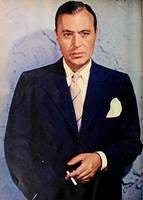
Charles Boyer—Wikipedia Photo
In the summer of 1977, Marla learned that Charles and Pat were leaving their longtime Beverly Hills home for Paradise Valley, Arizona—an exclusive, discreet enclave near the Arizona Biltmore. It was (and still is) a peaceful retreat for celebrities easing into retirement. Charles offered no reason for the move, giving only an address and a phone number.
The day after she arrived in Phoenix, she called. Charles answered, his voice thin and quiet. She apologized for the surprise call, explaining that she had left Switzerland on short notice. He responded in almost a whisper, saying he couldn’t talk on the phone “just now” and asking whether he could come by her place “to explain.”
Puzzled by the strange exchange, Marla replied, “Of course.”
Boyer arrived alone late the following morning. Marla was startled when she opened the door. A worn-down man had replaced the suave, elegant film star she remembered. His clothes hung loosely, and his posture was slouched. His eyes revealed something she hadn’t seen in him before: fear and grief. Her surprise wasn’t due to his baldness, as he had always been bald, wearing toupees in all his roles. That gave him a perfect disguise, as no one recognized him in public.
He told Marla that Pat was dying of cancer. By his choice, she remained unaware of her diagnosis. He said he couldn’t bring himself to tell her the truth. He explained that they had left Los Angeles not for the desert air, the excuse he used with Pat, but to escape Hollywood’s whisper network, where news of illness, scandal, or death spreads quickly. In Phoenix, he believed he could maintain the myth he had woven about their move: that it was for her health and that she would soon recover. He (and probably she) knew better. He also said that Pat was no longer able to receive visitors, but that Marla should call her by phone to lift her spirits. Marla didn’t call, taking Charles’ comment as a socially appropriate excuse given the situation.
The house Boyer bought in Paradise Valley needed renovations. As part of his deception, he contracted for the work, believing it would strengthen his story to Pat that she would soon recover. The renovations were so extensive that they couldn’t comfortably stay in the house while the work was underway. Charles accepted an offer from a friend, Marje Everett, to stay temporarily in one of her rarely used “alternate” homes in Scottsdale. It took Marla a moment to “place” Marje in her memory.1
On August 24, 1978, at Everett’s home, Boyer’s deception ended with Pat’s death.
Overcome by the reality he had spent years denying, Boyer called Marla. She took a taxi to the address he gave and found Charles in the bedroom, sitting beside Pat’s body, holding her hand and crying. He looked up only briefly.
“Help me, please. I don’t know what to do.”
Because she didn’t drive, Marla struggled with Phoenix’s complicated geography and its patchwork of city boundaries. She called the Phoenix police instead of the Scottsdale police and eventually sorted it out while Boyer sat with Pat, crying. A Scottsdale officer arrived, confirmed that her death appeared natural, and gently told Charles to contact a mortuary to collect Pat’s body. Charles looked at Marla, his eyes pleading. Marla turned to the phone directory again, picked the most prominent ad in the Yellow Pages, and made the call.
She then pulled up a chair and sat quietly, holding Charles’s other hand until the mortuary transport team arrived and departed, leaving Charles even more upset. At a loss for what else to say or do, Marla offered more words of comfort, called a cab, and left Charles to grieve.
The day after Pat’s death, Marla had a brief phone call with Charles. His voice was barely audible, hoarse and broken, trailing off mid-sentence. He assured her he was “okay,” though it was clear he was not. Grief had drained him.
Marla called the next day again, but there was no answer. The day after, her call went unanswered once more. Alarmed, Marla contacted the Scottsdale police officer who had given her his card after Pat’s death and asked him to check on Charles. He found Charles unconscious, with an empty bottle of Seconal on the nightstand. A fire department ambulance transported him to St. Joseph’s Hospital in central Phoenix, where he died in the emergency triage area, just two days before what would have been his seventy-ninth birthday. Marla arranged for both bodies to be shipped to Los Angeles for burial next to their only child, Michael, who had committed suicide in 1965.
We sat quietly for a moment, Marla’s narration settling over us like summer dusk. She had spoken with little sentimentality, in a slightly rambling way as she navigated her memories of the event, but had drained herself of emotional energy.
Hearing her speak of Boyer—not in the abstract but as a friend, portraying him as a broken man in a Scottsdale bedroom—changed something fundamental in our understanding of Marla: her life had been spent with few friends, as if she expected they would soon be lost, so she never developed, or suppressed, the sense of sentimentality that no doubt explained the lack of photos and memorabilia in her house.
Her narrative hadn’t revealed the name of her deceased lover, though that’s where she was headed when exhaustion set in. She was too wrung out to continue that day.
Heather and I stammered over what to say, finally just thanking her for sharing her sad experiences and telling her we would love to hear more when she felt up to it.
The woman we considered one of our dearest friends—the mysterious woman in silk blouses, linen skirts, and double-faced wool suits who glided around the Biltmore in her yellow golf cart—was more than just a relic from another era; she had been a participant in it. She had been part of the Hollywood scene during the long era of film noir and classic westerns that still captivate movie fans. Heather had known about the Boyers’ deaths; it was big local news at the time, but she had forgotten about them.
For me, not in any devious way, there was now no turning back. I had to have the full story.
Marje Everett was the adopted daughter of Ben Lindheimer, a Chicago real estate executive, politician, and owner of racehorses and several racetracks, and a friend of many Hollywood celebrities and industry moguls. From childhood, Marje had “grown up” with celebrities hanging around her house, often sleeping over after parties. From the time she could walk, Marje was her father’s shadow, learning his business from the ground up. When Ben died in 1960, she inherited and expanded his empire, focusing mainly on growing and modernizing the racetracks. She was the only female track owner in that business, yet she commanded the other owners’ respect and fear because of her relentless drive to modernize. Despite this, she was liked by everyone, even as her “crustiness” and tolerance for others’ bad behavior were often noted. From her youth, she was drawn into her father’s large network of Hollywood friends. Bing Crosby, Don Ameche, and others were business partners in some of Ben’s sports ventures and were considered part of the family. According to her LA Times obituary, “some of her closest associates over the years were Ronald and Nancy Reagan, Angie Dickinson, Cary Grant, and John Forsythe. It was standard fare at her parties for Jimmy Stewart to sit down at the piano and sing a few tunes.”